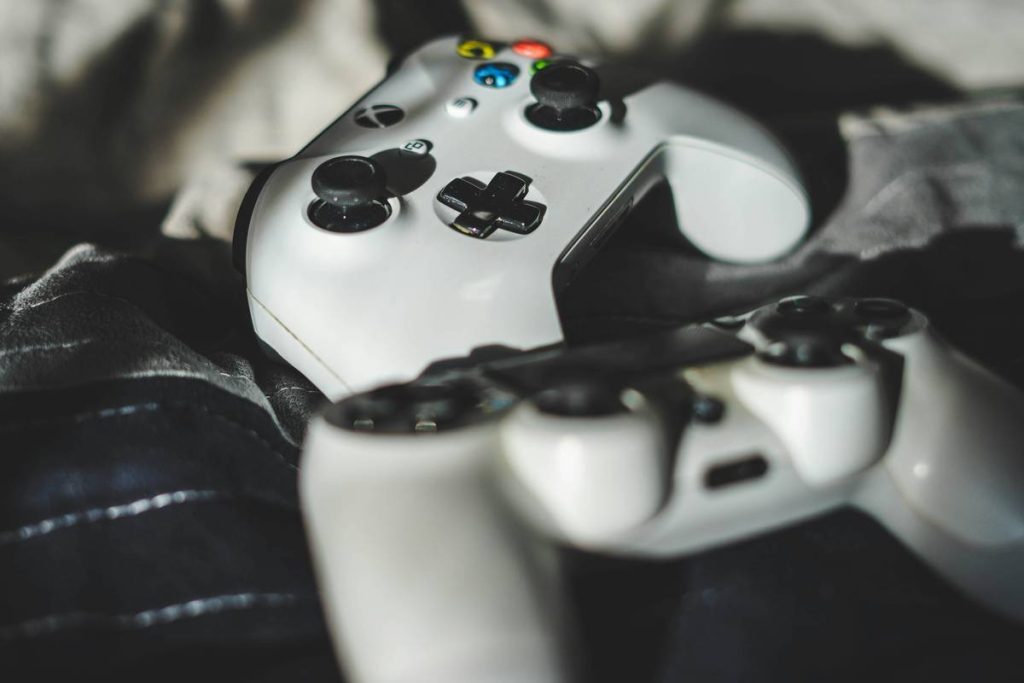
You bought a next-gen VR headset. You’re immersed—until you reach for your standard gaming controllers for xbox. They don’t track motion. No finger sensing. Zero haptics beyond rumble. And suddenly, you’re pulled out of the experience like someone flipped a light switch. The problem isn’t your headset—it’s the controller mismatch. Here’s how to fix it without ditching your Xbox ecosystem.
Why Traditional Gaming Controllers for Xbox Fail in VR
Xbox controllers were engineered for couch-based gaming—precision analog sticks, ergonomic grips, responsive triggers. Perfect for Halo. Useless for grabbing virtual objects or casting spells with hand gestures. VR demands 6DoF tracking, capacitive touch sensors, and adaptive haptics. Standard gaming controllers for xbox offer none of that.
And Microsoft never released official VR controllers. So modders, indie devs, and hardware hackers stepped in. But most guides still push outdated workarounds—Bluetooth pairings that drop frames, or bulky dongles that ruin immersion. The truth? You don’t need to abandon Xbox compatibility to get true VR control.
The Step-by-Step Guide to Using VR Controllers with Xbox Titles
The key isn’t forcing an Xbox pad into VR—it’s bridging VR input back into Xbox-compatible signals. Think of it as translation, not replacement.
Step 1: Choose a VR Controller with Open Input Mapping
Valve Index Knuckles, Meta Quest Touch Pro, or even PICO 4 controllers all support custom input profiles via SteamVR or third-party tools like reWASD. Avoid closed ecosystems like PSVR2—they lock you out.
Step 2: Route Inputs Through a Translation Layer
Use software like **OVR Advanced Settings** or **Driver4VR** to map finger curls, thumbsticks, and grip pressure to virtual Xbox button presses. Yes, it sounds technical—but modern GUIs make it drag-and-drop simple. Map your index finger squeeze to “A,” wrist flick to right stick tilt, etc.
Step 3: Stream Xbox Games to PC (or Cloud)
Xbox consoles don’t natively support VR headsets. Workaround? Stream via Xbox Wireless Streaming (on Windows 11) or cloud services like NVIDIA GeForce NOW if the title’s available. Now your translated VR inputs flow into the game as if they came from a real Xbox pad.
| Solution | Setup Complexity | Input Latency | Xbox Game Compatibility |
|---|---|---|---|
| Native Xbox Controller (No VR) | None | 8–12ms | 100% |
| VR Controller + reWASD + Local Streaming | Moderate | 22–35ms | ~85% (excludes anti-cheat titles) |
| Cloud VR (GeForce NOW + Quest) | Low | 45–70ms | Only supported cloud titles |

The Industry Secret Nobody Talks About
Here’s what Microsoft won’t admit: their Xbox team has built VR-ready controllers. Twice. Internal prototypes from 2017 and 2021 featured finger tracking rings and inside-out cameras—shelved both times over “market timing.” But those designs leaked into Valve’s R&D pipeline. That’s why Index controllers feel oddly familiar to long-time Xbox fans. The ergonomics? The trigger curve? Not a coincidence.
So while Microsoft waits, VR-savvy Xbox gamers are already hacking the future. And frankly—it works better than waiting for corporate approval.
FAQ
Can I use Oculus Quest controllers with Xbox games?
Yes—but only by streaming Xbox games to a PC and using input remapping software. Direct console connection isn’t possible.
Do VR controllers work with Xbox Cloud Gaming?
Partially. Only on devices that support Bluetooth HID controllers (like Android phones). Full VR headset integration requires a PC bridge.
Is latency too high for competitive FPS games?
Usually. Stick to single-player or casual multiplayer. For ranked Halo or Call of Duty, a native Xbox pad still wins.